Six Realities of Life

Six Realities of Life – Lessons Beyond Numbers

At Fanoos Accounting Services, we believe success in business and in life goes hand in hand with timeless values. Numbers may tell a story, but principles give that story meaning. Here are six realities of life that inspire us daily:

1️⃣ Success is nothing without integrity
Achievements are hollow if they are not built on honesty, transparency, and strong ethical foundations.

2️⃣ Freedom is nothing without responsibility
True independence — whether personal or professional — comes with accountability for our actions and decisions.

3️⃣ Knowledge is nothing without action
Learning has value only when applied. It is action that transforms information into progress.

4️⃣ Love is nothing without trust
In both relationships and partnerships, trust is the invisible thread that holds everything together.

5️⃣ Growth is nothing without struggle
Every challenge we overcome becomes a stepping stone toward greater strength and resilience.

6️⃣ Time is nothing without purpose
Time is the most valuable resource. Without clear goals, even years can slip away unnoticed.

✨ At Fanoos, we carry these lessons into our work — serving clients with integrity, responsibility, and purpose while constantly striving for growth.

Secure Cloud Backup Solutions with Fanoos Accounting Services

Powered by iDrive – Reliable, Scalable, and Affordable

At Fanoos Accounting Services, we understand how critical your data is. Whether you are a business, nonprofit organization, or an individual professional, protecting your information is essential for smooth operations, compliance, and peace of mind.

That’s why we have partnered with iDrive, a global leader in cloud storage and backup solutions, to bring you secure, flexible, and cost-effective data backup services. Through our official iDrive Reseller Program, we help our clients move confidently to the cloud with complete support.

👉 Create your own drive here:
Get Started with iDrive Cloud Backup


Why Choose iDrive with Fanoos Accounting Services?

When you sign up through our portal, you don’t just get a subscription—you gain a full support package from our expert team. We provide end-to-end assistance to ensure your transition to the cloud is smooth and your data is always safe.

Our Free Value-Added Services:

Account Setup – We create and configure your iDrive account for seamless access.
System Setup – Installation and integration across your devices and servers.
Training – Step-by-step guidance for you and your team on how to use iDrive effectively.
Backup Setup – Customized backup scheduling to fit your business or personal needs.
Data Restoration Support – Fast and reliable assistance whenever you need to recover files.


Key Benefits of iDrive Cloud Backup

  • Secure & Encrypted – Industry-standard encryption ensures your data remains private and protected.

  • Cross-Platform Support – Backup and sync data across PCs, Macs, iOS, Android, and servers.

  • Versioning & Snapshots – Keep multiple versions of your files and restore when needed.

  • Scalable Plans – Storage that grows with your requirements.

  • Disaster Recovery – Quick recovery options to minimize downtime in case of data loss.

  • Affordable Pricing – Pay less while enjoying enterprise-grade security and reliability.


Who Can Benefit?

  • Businesses & Startups – Protect customer data, accounting files, and operational records.

  • Nonprofit Organizations – Ensure critical donor and project files are always safe.

  • Educational Institutions – Safeguard research data, reports, and student records.

  • Freelancers & Professionals – Secure important client documents, creative work, and portfolios.

  • Individuals – Protect personal files, family photos, and sensitive documents.


Get Started Today

Start protecting your valuable data with iDrive through Fanoos Accounting Services. Our team will be with you every step of the way—from setup to ongoing support.

👉 Click here to sign up now:
Join iDrive with Fanoos Accounting Services

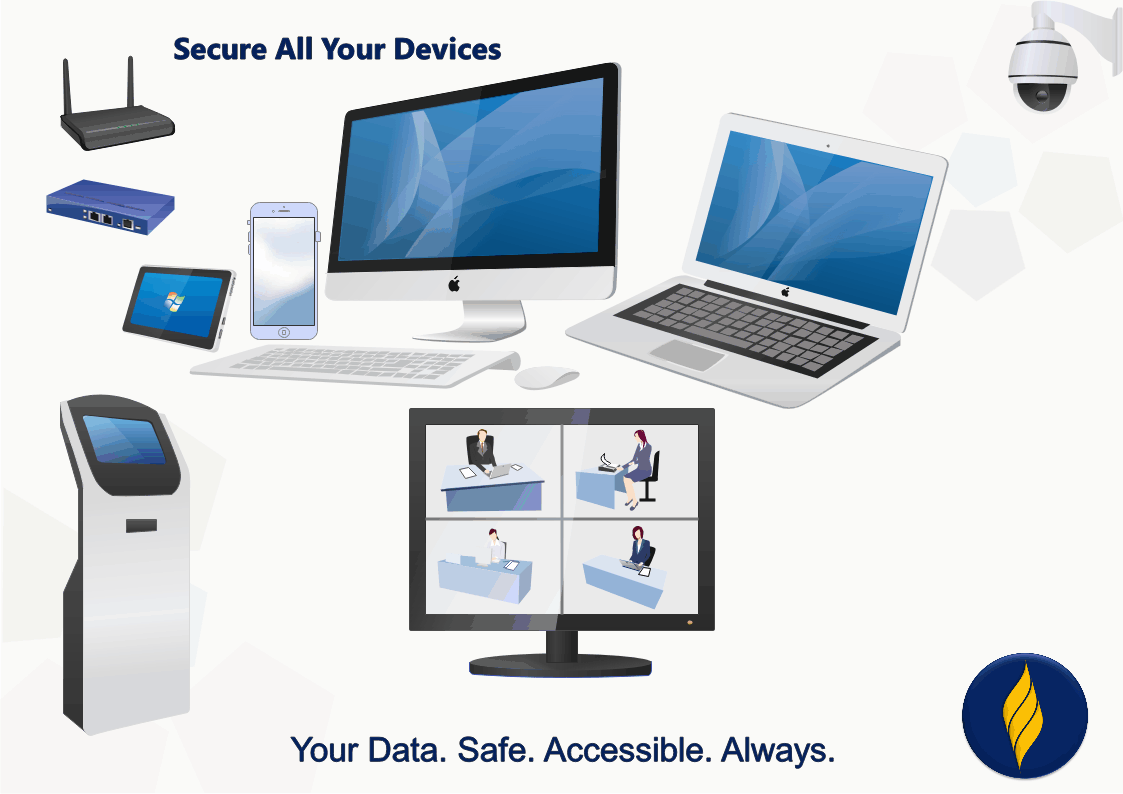
Your Data. Safe. Accessible. Always.

IFAC’s Global Survey of SMEs

International Federation of Accountants – Wikipedia Dear colleague, We're writing to request your support for IFAC's global survey of small- and medium-sized enterprises (SMEs) about their use of sustainability-related information. Please forward this email to senior individuals working at your SME clients and encourage them to complete the short (10–15 minute) survey. The survey is available HERE. Our goal is to better understand the extent to which sustainability-related information is being prepared by SMEs, used by SMEs in internal decision-making, or provided to supply chains, lenders, or other stakeholders. Please see this short video for more information. The survey is open in seven languages (Arabic, Chinese, English, French, Portuguese, Spanish, and Turkish). Should you have any questions, or for further information, please e-mail ChristopherArnold@ifac.org and DavidMadon@ifac.org. Sincerely, Christopher Arnold, Director, IFAC David Madon, Director, IFAC

IFAC’s Global Survey of SMEs

International Federation of Accountants – Wikipedia Dear colleague, We're writing to request your support for IFAC's global survey of small- and medium-sized enterprises (SMEs) about their use of sustainability-related information. Please forward this email to senior individuals working at your SME clients and encourage them to complete the short (10–15 minute) survey. The survey is available HERE. Our goal is to better understand the extent to which sustainability-related information is being prepared by SMEs, used by SMEs in internal decision-making, or provided to supply chains, lenders, or other stakeholders. Please see this short video for more information. The survey is open in seven languages (Arabic, Chinese, English, French, Portuguese, Spanish, and Turkish). Should you have any questions, or for further information, please e-mail ChristopherArnold@ifac.org and DavidMadon@ifac.org. Sincerely, Christopher Arnold, Director, IFAC David Madon, Director, IFAC

Ali Reza Sultani

A Message of Gratitude from One of Our Former Students

"Dear Mr. Ahmadi,
I hope this message finds you well.
I just wanted to take a moment to express my sincere gratitude and share a reflection with you.
You are the one who introduced me to the world of accounting and QuickBooks, and you truly changed the direction of my life.
I am deeply thankful for everything you taught me, and I wish you continued success and prosperity always."

— A former participant of our Accounting & QuickBooks training program in 2013 (Message received on April 15, 2025)

Our Gratitude to a Former Student

We are truly humbled and honored to receive such kind words from one of our former Accounting & QuickBooks students.
Your message reminds us why we do what we do — to inspire, support, and create real impact.
Thank you for your appreciation and trust. Your success is our greatest achievement.
We wish you even more growth and accomplishments ahead!

Fanoos Accounting Services

Outsourced Bookkeeping Services

Outsourced Bookkeeping Services

Managing day-to-day financial records is one of the most time-consuming yet critical tasks for any business or organization. At Fanoos Accounting Services, we take the complexity out of bookkeeping by offering reliable and confidential outsourced bookkeeping solutions tailored to your needs. Our goal is simple: give you peace of mind while you focus on growing your business.

What We Do

Our outsourced bookkeeping services cover the full cycle of financial recordkeeping:

  • Recording daily transactions with accuracy and attention to detail

  • Categorizing expenses and revenues in line with accounting standards

  • Reconciling accounts with supporting documents provided by the client

  • Preparing monthly, quarterly, or annual financial reports

  • Providing real-time insights for better financial decision-making

We act as your trusted back-office partner, ensuring your books are always up to date, error-free, and ready for management review, auditors, or donors.

Key Benefits

  • Save Time: Eliminate the burden of routine bookkeeping tasks.

  • Ensure Accuracy: Benefit from professional oversight to minimize errors.

  • Confidentiality Guaranteed: Your financial data is handled with the highest level of care.

  • Cost-Effective: Avoid the overhead of hiring and training in-house staff.

  • Scalable Service: Whether you’re a startup, SME, or NGO, our services grow with your needs.

Why Choose Fanoos Accounting Services?

  • More than 15 years of experience in bookkeeping and accounting system development

  • Expertise with leading software including QuickBooks, Xero, and MYOB

  • Proven track record supporting NGOs, businesses, and institutions locally and internationally

  • Commitment to delivering timely, accurate, and actionable financial information

Let’s Simplify Your Bookkeeping

Outsourcing your bookkeeping to Fanoos Accounting Services means more than just recording transactions — it’s about gaining a partner dedicated to your financial clarity and long-term success. Contact us today to explore a service package that fits your organization’s needs.

Our Outsourced Bookkeeping Services Packages

Basic Package

Simple Bookkeeping

$50

Per Month

  • QuickBooks Desktop Version
  • Only Reporting User
  • Monthly Backup file
  • Financial Statements
  • Limited Support
Request Now
Best Choice

Standard Package

Mediume Bookkeeping

$150

Per Month

  • QuickBooks Online Essentials
  • Only Accountant User 
  • Including all Basic Package
  • Monthly Hard Document Review
  • With Free Tax Advisory
Request Now

Premium package

Advanced Bookkeeping

$250

Per Month

  • QuickBooks Online Plus
  • 1 Accountant + 1 Admin User
  • Including all Standard Package
  • Budgeting and Management Reporting
  • With Free Financial Advisory
Request Now
Request a Proposal

Managing books doesn’t have to be stressful or expensive. At Fanoos Accounting Services, we provide cost-effective outsourced bookkeeping tailored to businesses and NGOs operating in Afghanistan. From preparing accurate financial reports for donors and government ministries to ensuring compliance for external audits, we deliver the professional support you need — at a fraction of the cost of hiring full-time staff.

register
it's completely free

Business Stakeholders

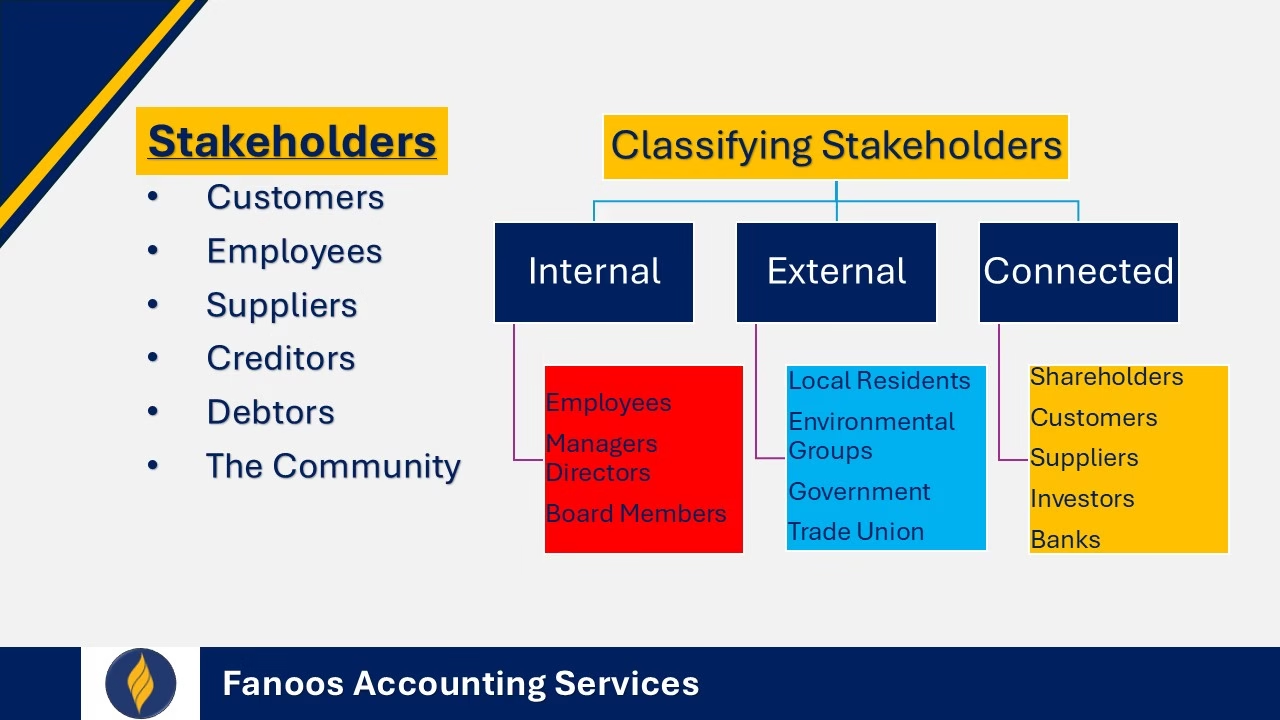
Stakeholders and Their Classification In the world of business and finance, the concept of stakeholders plays a crucial role in decision-making, strategic planning, and long-term sustainability. Stakeholders are individuals or groups that have an interest in or are affected by a company's actions, objectives, and policies. Understanding stakeholder classification helps organizations effectively manage relationships, allocate resources, and enhance overall corporate performance.

Who Are Stakeholders?

Stakeholders are entities that can influence or be influenced by a company's operations. They may include employees, customers, investors, suppliers, government bodies, and the community at large. The interests of stakeholders vary widely, making their classification essential for addressing their concerns efficiently.

Classification of Stakeholders

Stakeholders can be classified in various ways based on their relationship with the organization, level of influence, and the nature of their interest. The primary classifications include:

1. Internal vs. External Stakeholders

Internal Stakeholders:

These are individuals or groups within the organization who have a direct interest in its operations and success. Key internal stakeholders include:
  • Employees: They depend on the company for income, job security, and career growth.
  • Managers and Executives: They are responsible for decision-making and ensuring the company's success.
  • Shareholders/Owners: They have a financial stake in the company and expect profitability and return on investment.

External Stakeholders:

These stakeholders exist outside the company but are still impacted by its activities. They include:
  • Customers: Rely on the company for quality products and services.
  • Suppliers: Provide essential goods and services and expect timely payments.
  • Government and Regulatory Bodies: Ensure compliance with laws, taxation, and industry regulations.
  • Community and Society: Are affected by corporate social responsibility initiatives, environmental impact, and economic contributions.

2. Primary vs. Secondary Stakeholders

Primary Stakeholders:

These are individuals or groups directly engaged with the organization and essential to its survival. Examples include employees, investors, and customers.

Secondary Stakeholders:

While they are not directly involved in the company's operations, they still influence or are influenced by its actions. Examples include media, advocacy groups, and trade associations.

3. Direct vs. Indirect Stakeholders

Direct Stakeholders:

They are directly impacted by the company's decisions and operations. Employees and customers fall into this category.

Indirect Stakeholders:

They are affected by the company’s actions in a broader sense, such as government agencies and environmental organizations.

4. Voluntary vs. Involuntary Stakeholders

Voluntary Stakeholders:

These stakeholders willingly engage with the organization, such as investors and business partners.

Involuntary Stakeholders:

These are groups affected by a company’s operations without their direct involvement, such as local communities impacted by environmental policies.

Why is Stakeholder Classification Important?

Understanding and classifying stakeholders helps businesses:
  • Prioritize Engagement: Identify key stakeholders to foster strong relationships.
  • Manage Risks: Address concerns before they escalate into major challenges.
  • Enhance Decision-Making: Consider diverse perspectives for well-rounded corporate strategies.
  • Improve Reputation: Build trust with stakeholders, enhancing brand image and market position.

How Fanoos Can Help Business Owners

At Fanoos Accounting Services, we understand the importance of managing stakeholders effectively to ensure business success. We offer tailored financial and accounting solutions that help business owners:
  • Optimize Financial Management: Our expert accounting services ensure accurate bookkeeping, tax compliance, and financial reporting.
  • Enhance Decision-Making: We provide financial insights and analysis to help businesses make informed strategic decisions.
  • Ensure Regulatory Compliance: We assist with compliance requirements to prevent legal and financial risks.
  • Improve Business Efficiency: Our accounting tools and advisory services streamline financial operations, allowing business owners to focus on growth.
  • Stakeholder Communication: We help businesses prepare clear financial reports for investors, banks, and regulatory authorities.
By partnering with Fanoos, business owners can gain financial clarity, enhance their stakeholder relationships, and achieve long-term growth and sustainability.

Conclusion

Stakeholders are integral to an organization's success, and their classification allows businesses to effectively manage relationships and align objectives with stakeholder expectations. Companies that proactively engage with their stakeholders create sustainable growth opportunities, strengthen their corporate reputation, and ensure long-term success. By understanding stakeholders and their classifications, businesses can develop strategic initiatives that drive mutual benefits, fostering trust and collaboration in an ever-evolving corporate landscape.

IFRS Standards

Understanding IFRS Standards: A Guide for Businesses and Professionals

International Financial Reporting Standards (IFRS) are globally recognized accounting principles that enhance transparency, consistency, and comparability in financial reporting. Businesses adopting IFRS ensure compliance with international best practices, which is essential for growth and global investment opportunities.

Key IFRS Standards Explained

🔹 IFRS 1 – First-time Adoption of IFRS
Guides companies transitioning from local GAAP to IFRS, ensuring a smooth and standardized shift.

🔹 IFRS 2 – Share-based Payment
Regulates the recognition of stock options and other share-based transactions in financial statements.

🔹 IFRS 3 – Business Combinations
Sets principles for reporting mergers and acquisitions, emphasizing fair valuation of acquired assets.

🔹 IFRS 5 – Non-current Assets Held for Sale and Discontinued Operations
Specifies how to classify and report assets intended for sale or operations that are discontinued.

🔹 IFRS 6 – Exploration for and Evaluation of Mineral Resources
Provides guidelines for reporting exploration and evaluation costs in the mining and energy sectors.

🔹 IFRS 7 – Financial Instruments: Disclosures
Mandates transparency in financial risk management and financial instruments used by businesses.

🔹 IFRS 8 – Operating Segments
Requires entities to disclose financial performance based on different business segments.

🔹 IFRS 9 – Financial Instruments
Outlines accounting treatment for financial assets and liabilities, including impairment models.

🔹 IFRS 10 – Consolidated Financial Statements
Defines when and how a parent company must consolidate its financial statements with subsidiaries.

🔹 IFRS 11 – Joint Arrangements
Governs the accounting for joint ventures and collaborations between businesses.

🔹 IFRS 13 – Fair Value Measurement
Establishes a framework for measuring and disclosing fair value across financial statements.

🔹 IFRS 15 – Revenue from Contracts with Customers
Standardizes revenue recognition principles, ensuring accurate and consistent reporting.

🔹 IFRS 16 – Leases
Requires lessees to recognize most leases as assets and liabilities on the balance sheet.

Why IFRS Matters for Your Business

Adopting IFRS improves financial transparency, investor confidence, and comparability with global competitors. Whether you're a startup, a growing enterprise, or a multinational corporation, compliance with IFRS enhances credibility and financial decision-making.

📢 Stay Updated with Fanoos Accounting Services (FAS)
At FAS, we help businesses implement IFRS efficiently. Contact us for expert financial reporting, compliance, and advisory services.

🔗 Visit our website for more insights and updates!

Classification of Organizations Under IFRS and Comparison with Afghanistan’s Business Environment

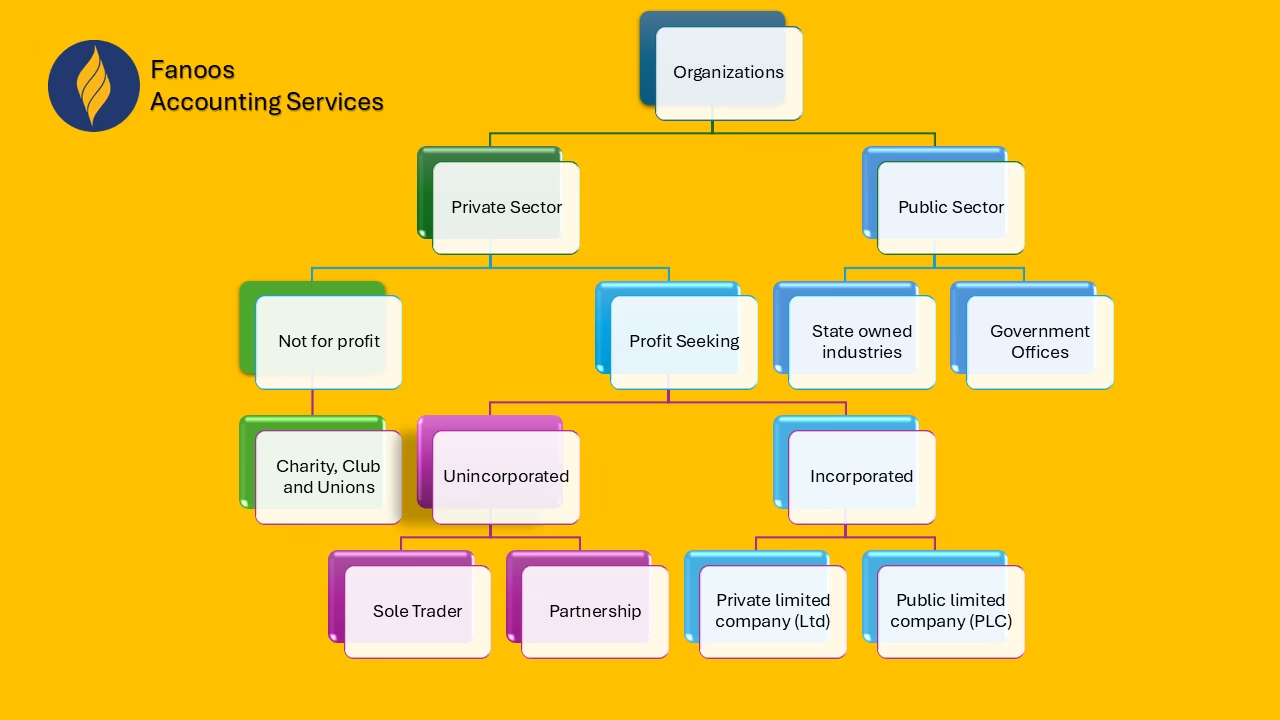
1. IFRS-Based Classification of Organizations

International Financial Reporting Standards (IFRS) categorize organizations based on their legal structure, financial reporting obligations, and ownership model. These classifications impact accounting policies, tax treatments, and regulatory compliance.

1.1 Public Sector Entities (PSEs) – IFRS for Public Sector Accounting (IPSAS)

Public sector entities are government-controlled organizations responsible for public service delivery and national economic management. These entities follow International Public Sector Accounting Standards (IPSAS) instead of IFRS.

🔹 IFRS Definition:

  • Funded primarily through taxation and government revenues.
  • Not profit-oriented but accountable for public financial transparency.
  • Uses accrual-based IPSAS for financial reporting.

🔹 Comparison with Afghanistan:

  • Ministry of Finance (MoF) – National budget control and fiscal policy.
  • Da Afghanistan Bank (DAB) – Central bank regulating monetary policy.
  • State-Owned Enterprises (SOEs) like Afghan Telecom (telecom) and Pashtany Bank (banking) operate commercially but under government control.

💡 Key Difference: In Afghanistan, SOEs operate under hybrid financial models, often using modified cash accounting rather than full IPSAS compliance.


1.2 Not-for-Profit Organizations (NPOs) – IFRS for Non-Profit Entities

Non-profits exist to serve public or social causes, funded through donations, grants, and membership contributions.

🔹 IFRS Definition:

  • Not focused on profit but must maintain financial accountability.
  • Follow fund accounting to track restricted and unrestricted funds separately.
  • IFRS doesn't directly apply but IFRS for SMEs may be used for financial statements.

🔹 Comparison with Afghanistan:

  • Shuhada Organization – Focuses on education and healthcare.
  • Afghanistan Red Crescent Society – Humanitarian aid.
  • ACCI (Afghanistan Chamber of Commerce & Investment) – Business advocacy.

💡 Key Difference: Afghan NPOs rely heavily on donor funding, which requires donor-specific financial reporting rather than full IFRS-based statements.


1.3 For-Profit Organizations – IFRS for Commercial Enterprises

For-profit businesses range from small sole proprietorships to multinational corporations, and IFRS classifies them based on ownership structure, liability, and reporting obligations.

1.3.1 Sole Proprietorships & Partnerships (Unincorporated Entities) – IFRS for SMEs

🔹 IFRS Definition:

  • No legal distinction between business and owner.
  • Use simplified accounting (cash or accrual basis) under IFRS for SMEs.

🔹 Comparison with Afghanistan:

  • Local traders in Mandawi Market (Kabul) – Textile and general merchandise traders.
  • Small transport businesses – Owned by individuals.
  • Partnerships in saffron and dried fruit exports – Jointly managed by Afghan entrepreneurs.

💡 Key Difference: Afghanistan’s small businesses often rely on cash-based accounting, while IFRS for SMEs recommends accrual accounting.


1.3.2 Private Companies (Ltd) – IFRS for SMEs & Full IFRS

🔹 IFRS Definition:

  • Legally separate from owners, offering limited liability.
  • IFRS for SMEs applies unless it grows large enough for full IFRS.

🔹 Comparison with Afghanistan:

  • Roshan Telecom – Telecom sector leader.
  • Bayat Group – Diversified business (media, construction, energy).
  • Ghawarsha Food Industries – Processed food manufacturer.

💡 Key Difference: Afghan private firms follow local accounting standards with limited IFRS adoption due to regulatory constraints.


1.3.3 Public Companies (PLC) – Full IFRS Compliance

🔹 IFRS Definition:

  • Shares traded publicly, requiring full IFRS reporting.
  • Strict financial disclosure for investor protection.

🔹 Comparison with Afghanistan:

  • Afghanistan International Bank (AIB) – Fully compliant with IFRS.
  • Maiwand Bank – Another IFRS-adopting Afghan bank.
  • Ariana Afghan Airlines – Government-owned but operates commercially.

💡 Key Difference: Afghanistan lacks a stock exchange, so few companies follow full IFRS. Instead, banks and large firms adopt IFRS voluntarily for international credibility.


2. Key Differences: IFRS vs. Afghanistan’s Business Environment

Category IFRS-Based Organizations Afghanistan-Specific Comparison
Public Sector (IPSAS) Full IPSAS compliance for government entities Mostly modified cash basis accounting
Non-Profit (Fund Accounting) Uses fund-based accounting with IFRS for SMEs Donor-driven reporting, not full IFRS
Sole Proprietorships IFRS for SMEs (accrual-based) Mostly cash-based accounting
Private Limited Companies IFRS for SMEs or Full IFRS Partially adopted (basic IFRS principles)
Public Limited Companies Full IFRS (strict investor reporting) Limited due to lack of stock exchange

3. What Should Afghan Businesses Do?

For Public Entities:

  • Move towards IPSAS compliance for better transparency.
  • Adopt accrual-based budgeting for improved financial control.

For Non-Profit Organizations:

  • Implement IFRS for SMEs-based financial reporting.
  • Improve grant accountability through standardized fund tracking.

For Private Sector Businesses:

  • Train finance teams on IFRS for SMEs.
  • Larger companies should adopt full IFRS for investor confidence.

4. How Can Fanoos Accounting Services (FAS) Help?

At Fanoos Accounting Services (FAS), we help Afghan organizations:
🔹 Implement IFRS for SMEs for better financial reporting.
🔹 Train accounting teams to align with global standards.
🔹 Prepare financial statements based on IFRS or donor compliance.

📞 Contact us for expert IFRS advisory tailored to Afghanistan’s business needs!

Your Trusted Financial Partner

Welcome to Fanoos Accounting Services (FAS) – Your Trusted Financial Partner

Are you looking for reliable, professional, and expert accounting solutions? Fanoos Accounting Services (FAS) is your trusted partner for financial management, bookkeeping, auditing, and tax consulting. With years of experience in the Afghan market and international expertise, we help businesses streamline their finances with accuracy and efficiency.

Why Choose Fanoos Accounting Services?

Expertise & Experience: Our team consists of skilled professionals with deep knowledge of financial regulations and industry standards.
Comprehensive Accounting Solutions: From bookkeeping to financial analysis, we cover everything your business needs.
Technology-Driven Services: We leverage modern accounting tools like QuickBooks, Keeper, and Dext for efficient financial management.
Outsourced Accounting for Global Firms: We offer outsourced bookkeeping services for firms in Australia, Canada, the USA, and the UK to help them review and improve financial records.


Our Services

📊 Bookkeeping & Financial Reporting

Accurate financial records are key to business success. We offer error-free bookkeeping with monthly reports to help you make informed decisions.

🧾 Tax Consulting & Compliance

We ensure your business complies with local and international tax laws, maximizing deductions and minimizing liabilities.

📈 Audit & Financial Review

Our independent auditing services enhance financial transparency and accountability.

💼 Payroll Management

Save time and avoid payroll errors with our automated payroll processing and compliance solutions.

🌍 Outsourced Accounting for Global Clients

Are you an accounting firm in Australia, Canada, the USA, or the UK? Partner with us to review your clients’ QuickBooks files using Keeper & Dext, ensuring 100% financial accuracy.


Innovative Solutions for Modern Businesses

At Fanoos Accounting Services, we integrate advanced AI-driven accounting solutions like Keeper and Dext to automate transaction reviews and ensure error-free bookkeeping. Whether you are a small business or a multinational firm, our expertise ensures smooth financial operations and regulatory compliance.


Join the Fanoos Accounting Community

🔹 Follow Our Blog: Stay updated with expert insights on financial trends, tax policies, and accounting strategies.
🔹 Sign Up for Our Webinars: Learn from industry experts about modern accounting practices.
🔹 Connect with Us on Social Media: Get daily financial tips and updates on LinkedIn, Facebook, and Twitter.

📞 Need a consultation? Contact us today!

📍 Visit us: Fanoos Accounting Services
📧 Email: info@fanoosaccounting.com
📞 Call: +93 0799764533


Boost Your Business with Fanoos Accounting Services!

🔹 Accurate. Reliable. Professional.
🔹 Let’s take your finances to the next level.

PHP Code Snippets Powered By : XYZScripts.com